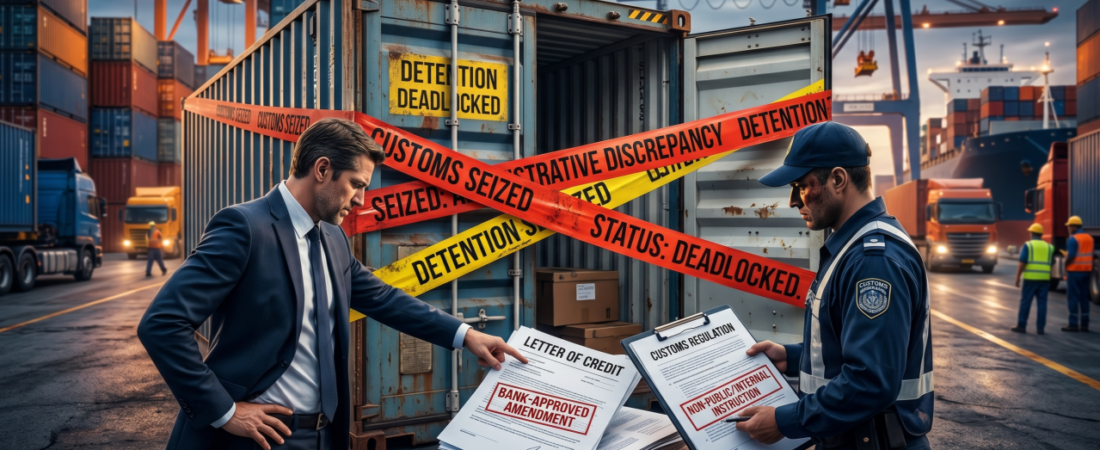
We talk about AI, Blockchain, and 24/7 connectivity. But while our tech moves at light speed, our regulatory mindset is moving backward.
The “Technical” vs. The “Intentional” Imagine a common high-volume scenario: Multiple active LCs (Letter of Credits), a high-pressure shipping schedule, and a minor clerical mismatch in documents.
In a logical world, the banking system handles this. Amendments are made. Documents are “cleaned.” The banks are satisfied. The government receives its full revenue.
But we are seeing a vicious new trend: The illegalization of administrative oversights.
The Deadlock of “Zero-Trust”
When destination authorities ignore bank-cleared amendments and treat clerical corrections as “deception,” the system collapses. We move from facilitating trade to obstructing commerce.
The ripple effects are devastating:
- Capital Stagnation: Millions in goods rotting under demurrage helps no one.
- Relationship Erosion: Decades of trust between exporter and importer are shredded by factors outside their control.
- Invisible Barriers: When regulations are applied based on “non-public” instructions, the cost of doing business becomes a gamble, not a calculation.
The Reality Check
This isn’t just a logistics “oops.” It’s a systemic failure. When a Bank-Validated Amendment is treated as a regulatory violation, we have reached a stage of economic self-sabotage.
3 Hard Truths We Must Address:
- Banking vs. Bureaucracy: If the global system (UCP 600) validates a correction, why does Customs see a “red flag”?
- The “Hidden” Rulebook: Regulations that aren’t public aren’t laws—they are traps. Transparency is the only path to resilience.
- The Death of Common Sense: When “compliance” ignores commercial reality with zero financial loss to the state, it isn’t protecting the economy—it’s strangling it.
The Path Forward: Resilience Over Rigidity
If we want supply chains that survive the next decade, we need a framework that distinguishes between malicious intent and mechanical error.
- Digital Transparency: Regulations MUST be public, gazetted, and integrated before the vessel sails.
- Recognition of Banking Norms: If both banks have validated a “good faith” correction, authorities must recognize that legal standard.
Global trade is built on the movement of goods, but it survives on the movement of trust.
Let’s Solve This Together 💡
I’m looking for perspectives from my network of Trade Finance experts and Supply Chain leaders:
👇 How do we fix the “Unwritten Rule”?
- Do we need a global “Standard of Grace” for bank-corrected errors?
- Should we mandate that all Customs instructions be digitized and public?
- Or is the only solution to “over-insure” against regulatory whims?
#GlobalTrade #TradeFinance #SupplyChain #Strategy #ImportExport #Logistics #LeadershipMindset #CustomsReform #ThoughtLeadership