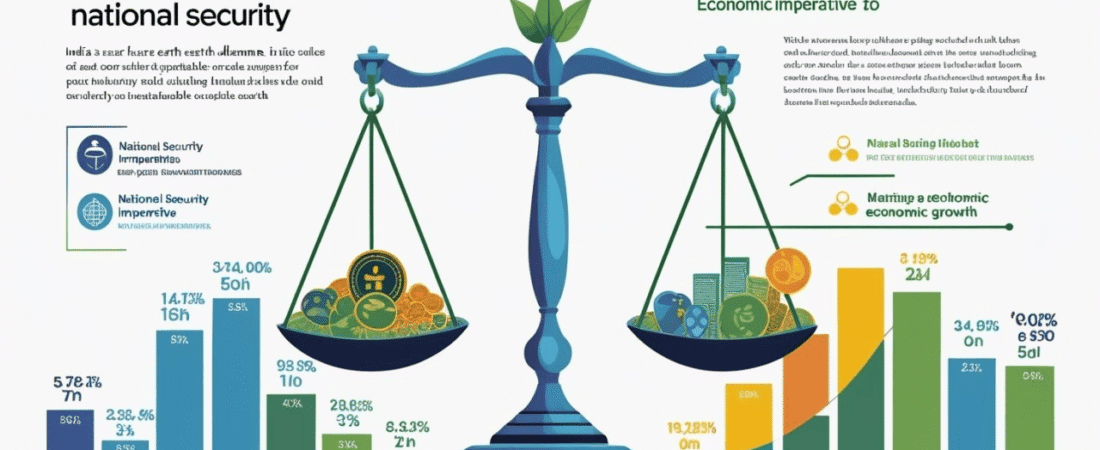
The recent news surrounding India’s rare earth elements (REE) strategy presents a critical juncture for our industrial future. While holding some of the world’s largest REE reserves (estimated at 6.9 million metric tonnes), our nation currently mines a paltry 0.74% of global output. This stark disparity, coupled with China’s tightening grip on global supply chains, creates an undeniable crisis for critical sectors like Electric Vehicles (EVs) and renewable energy.
The government’s cautious approach, driven by legitimate concerns over radioactive contamination and national security, to limit private sector involvement in REE mining containing radioactive traces, is understandable. The 2023 amendment to the MMDR Act, reserving such mining for state-owned agencies like IREL, reflects this priority.
However, the ripple effects of this caution are already being felt across the industry. Maruti Suzuki, Bajaj Auto, and TVS Motor are facing production cuts and potential halts due to the acute shortage of rare earth magnets, a direct consequence of China’s export restrictions and the lack of domestic alternatives. Our auto component manufacturers are caught in a bureaucratic maze, with visa applications and end-user certificates languishing, causing immense uncertainty.
While the proposed ₹3,500-5,000 crore incentive scheme for domestic REE production and magnet manufacturing is a welcome step, and the efforts by Attero to scale up rare earth recycling are commendable (a crucial pillar of a circular economy!), these are long-term solutions. The immediate crisis demands swifter, more agile responses.
We must ask ourselves:
- Can we truly afford to wait for a full-fledged domestic ecosystem to mature while our key industries face existential threats? The current crisis is a wake-up call, demonstrating the fragility of over-reliance on a single source.
- Is there a pathway to strategically liberalize REE mining, even for deposits with trace radioactivity, under stringent regulatory oversight and advanced safety protocols, enabling private expertise and investment to accelerate production? This isn’t about compromising safety, but about finding innovative solutions.
- What short-term tactical measures, beyond importing fully assembled motors (which will escalate costs and impact ‘Make in India’ initiatives), can we implement to keep our assembly lines moving? Exploring diverse international partnerships and even emergency procurement mechanisms should be on the table.
India’s ambition for “Viksit Bharat” and a robust clean energy transition hinges on a secure and sustainable supply of critical minerals. It’s time for a multi-pronged, urgent, and pragmatic approach that balances national security with the undeniable economic imperative to unlock our rare earth potential and build truly resilient supply chains. The current “rare” availability of these critical minerals is impacting not just our auto sector, but our broader strategic autonomy.
#RareEarths #CriticalMinerals #SupplyChainResilience #MakeInIndia #ElectricVehicles #Sustainability #NationalSecurity #IndiaEconomy #AutomotiveIndustry #PolicyReform