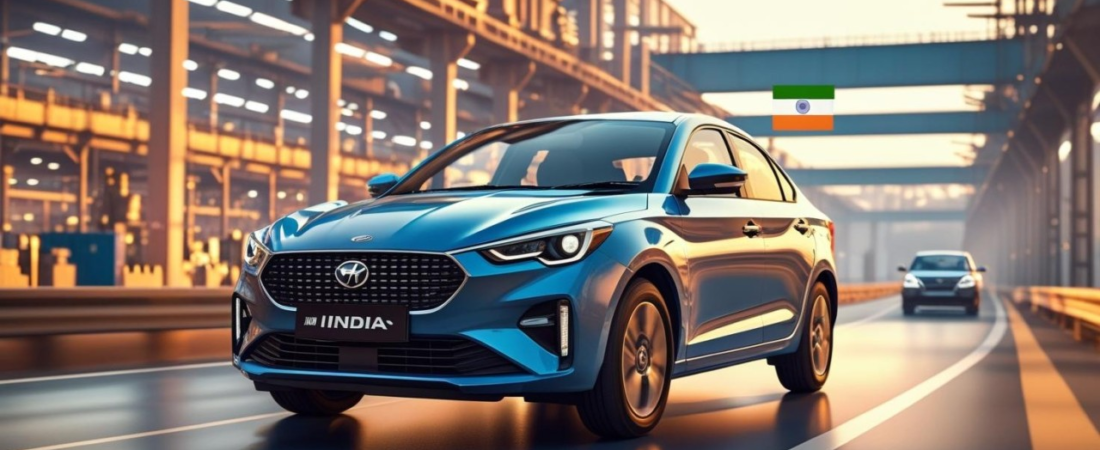
For too long, the narrative around India’s automotive sector has been singularly focused on its colossal domestic appetite. While our bustling roads and burgeoning middle class undoubtedly remain a critical engine, it’s time to shatter that limiting perception. A seismic shift is not just underway; it’s accelerating at a blistering pace. India is no longer merely ‘Making in India’ for its own consumption; it is unequivocally transforming into a global export powerhouse, poised to radically redefine its role in the international automotive value chain.
This isn’t aspirational rhetoric. This is a strategic acceleration, meticulously engineered, and driven by an industry that has finally seized its moment on the global stage.
The Unstoppable Momentum: A Decade of Unprecedented Transformation
The ‘Make in India’ initiative, ignited in 2014, wasn’t just a slogan; it was the bedrock for this ambition, building on the liberalization reforms of 1991. The results are nothing short of phenomenal:
- Production Boom: From a mere 2 million units in 1991-92, we’ve skyrocketed to approximately 28 million units in 2023-24. This isn’t just growth; it’s a manufacturing revolution.
- Investment Magnet: A staggering US$36 billion in Foreign Direct Investment (FDI) poured into the automotive sector in the last four years alone. Global players aren’t just dipping their toes; they’re diving in headfirst.
- Economic Engine: This industry is far more than just vehicles; it’s a cornerstone of our economy, contributing 6% to 7.1% of India’s GDP and a remarkable 49% to manufacturing GDP. It’s the spine of our industrial might.
- Job Creation Juggernaut: With an estimated 30 million jobs supported, including 4.2 million direct and 26.5 million indirect, the automotive sector is a vital employment generator. Union Minister Nitin Gadkari’s projection of India becoming the world’s largest auto industry in the next five years, creating 4.5 crore jobs, is not a distant dream – it’s an imminent reality.
Policy as the Accelerator: Fueling Advanced Manufacturing for Global Domination
This explosive growth is no stroke of luck. It is the direct, undeniable outcome of visionary government policies crafted to dismantle cost disadvantages, attract formidable investment, and forge a robust, future-ready supply chain:
- Production Linked Incentive (PLI) Schemes: With an outlay of INR 25,938 crore for PLI-Auto and INR 18,100 crore for Advanced Chemistry Cell (ACC) Battery manufacturing, these schemes are turbocharging domestic manufacturing of Advanced Automotive Technology (AAT) products. The demand for a minimum 50% Domestic Value Addition (DVA) is not just about local content; it’s about building deep, resilient indigenous capabilities. Companies have already committed over INR 25,000 crore in capital investment – this is serious capital flowing into serious manufacturing.
- FAME India Scheme: The Faster Adoption and Manufacturing of Electric Vehicles (FAME) scheme has been pivotal in driving clean mobility, with over 4.4 million EVs registered, and 1.9 million registrations in 2024 alone. This isn’t just about domestic adoption; it’s about building the scale and ecosystem required for EV exports.
- ‘Atmanirbhar Bharat’ and PM E-Drive: These initiatives are fostering self-sufficiency in critical components like EV batteries and engines, supporting startups and SMEs, and accelerating EV adoption with a significant allocation. We are strategically insulating ourselves from global supply chain shocks while simultaneously building exportable strengths.
The Export Horizon: India’s Uncompromising Global Ambition
The spotlight is now, rightly, and firmly, on exports. India’s automotive industry exported vehicles and auto components worth approximately US$35 billion in 2023-24, with automobile exports alone reaching 4.5 million units. The auto component sector defied expectations, transforming a US$2.5 billion deficit in FY19 into a US$300 million surplus in FY24. This is a monumental pivot.
Our global standing is no longer negotiable; it’s a matter of fact: We are the largest manufacturer of three-wheelers, among the top 2 in two-wheelers, top 4 in passenger vehicles, and top 5 in commercial vehicles worldwide.
NITI Aayog’s Vision 2030 isn’t just bold; it’s a roadmap to dominance:
- Triple exports to US$60 billion.
- Scale automotive component production to US$145 billion.
- Generate a trade surplus of US$25 billion.
- Expand global value chain (GVC) share from 3% to 8%.
- Create 2-2.5 million additional direct jobs.
To achieve this, India is strategically leveraging every lever:
- Free Trade Agreements (FTAs): The India-UK FTA is set to slash tariffs, flinging open doors for Indian-built cars and components to the UK and European markets. Similar negotiations with the EU and US aren’t just talks; they are tectonic shifts in global trade architecture.
- Export Promotion Schemes: Initiatives like RoDTEP, EPCG, Duty Drawback, and the Market Access Initiative (MAI) are making Indian goods irresistibly competitive by neutralizing embedded taxes and supporting critical market entry.
Navigating the Road Ahead: Challenges as Opportunities to Accelerate Further
Yes, challenges exist. Intense global competition, a historical 10% cost disadvantage compared to China, and a limited presence in high-precision components are real hurdles. But these are precisely the crucible where India’s strategic focus on R&D, advanced skill development, and cutting-edge manufacturing (Industry 4.0, AI, IoT, robotics) will forge weaknesses into unassailable strengths.
The global pivot towards Electric Vehicles (EVs) and sustainable mobility isn’t a threat; it’s an unparalleled opportunity. India’s unwavering commitment to promoting EV adoption and manufacturing uniquely positions it as a natural, undeniable hub for EV innovation and exports. We are not just participating in the EV revolution; we are helping to lead it.
The Future is Not Coming; The Future is Here, and It’s Indian
India’s automotive industry is not merely growing; it is evolving at an unprecedented, disruptive pace. With a manufacturing base that is robust and expanding, a workforce that is skilled and adaptable, and a government unequivocally committed to fostering innovation and global integration, India is poised to become the globally recognized supplier of next-generation mobility solutions.
The engines are revving. The policies are firmly in place. India is not just ready; it is determined to drive its automotive ambitions from ‘Make in India’ to truly ‘Export from India,’ irrevocably shaping the future of global mobility.
#AutomotiveIndustry #MakeInIndia #ExportFromIndia #ElectricVehicles #PLIScheme #FAMEScheme #GlobalManufacturing #NITI Aayog #MobilityRevolution #IndiaGrowthStory