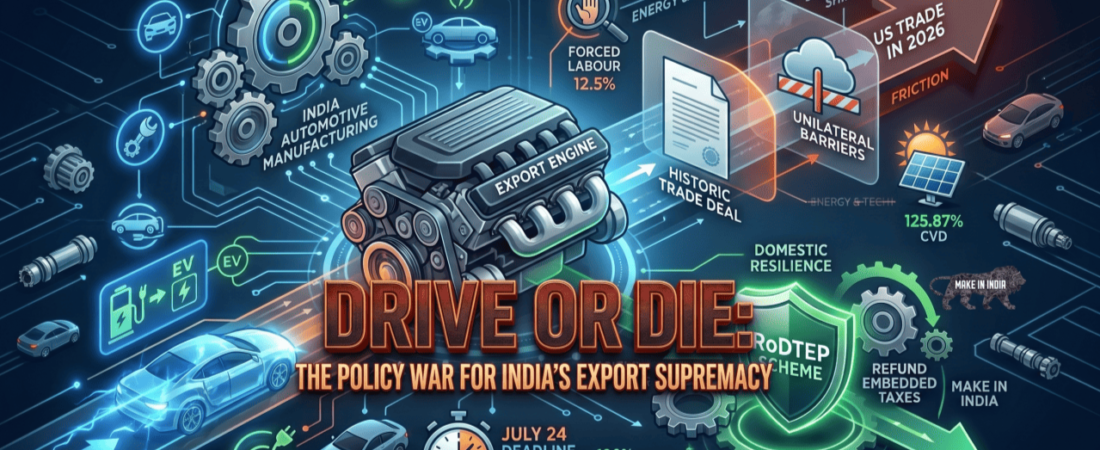
In the current global trade landscape, the automobile sector is the ultimate litmus test for resilience. As we navigate the high-stakes negotiations of 2026, the intersection of automotive manufacturing and domestic support schemes like RoDTEP has become the most critical lever for Automobile Marketers.
The Auto Sector: Exporting More than Just Vehicles
India’s automotive exports hit an all-time high in FY 2025-26, proving that our manufacturing prowess is no longer just a domestic story—it’s a global one. With the industry now pivoting to EVs , we aren’t just selling cars; we are exporting high-tech engineering to over 100 countries.
However, growth of this magnitude requires a shield against global volatility. This is where RoDTEP (Remission of Duties and Taxes on Exported Products) becomes a strategic asset rather than just an administrative footnote.
RoDTEP: Our Operational Stabilizer
The recent government move (April 2026) to align RoDTEP schedules with the revised Customs Tariff Act is a game-changer. For an industry operating on tight margins and complex global supply chains, this isn’t just “tax relief”—it’s working capital security.
- Why it matters: By refunding embedded taxes (like electricity and fuel duties) that aren’t covered by GST, RoDTEP directly improves our price competitiveness in the global market.
- The 2026 Reality: When geopolitical tensions spike logistics costs, having the stability of a WTO-compliant refund mechanism allows companies to maintain aggressive pricing without sacrificing the bottom line.
The Strategic Play for 2026
As we approach the July 24 deadline for the US interim trade pact, the auto sector must shift from “wait and see” to “strategic adaptation.” Here is how to play it:
- Integrate RoDTEP into P&L: Don’t treat export rebates as a post-facto benefit. Treat them as a core component of our unit-cost strategy. The recent alignment of 194+ tariff lines means our compliance and logistics teams need to be perfectly synchronized to capture every credit.
- Hedge Against “Complexity Premiums”: With the US watching labor and supply chain transparency closely, ensure our export documentation is bulletproof. The cost of non-compliance—like the preliminary CVDs seen in solar—far outweighs the short-term gains of aggressive pricing.
- Leverage Geographical Diversification: Diversification across countries isn’t just about market share; it’s about risk mitigation. If one trade corridor becomes “friction-heavy,” our infrastructure must be agile enough to pivot volume to more stable regions.
The Bottom Line
The “historic” India-US deal will undoubtedly open doors, but the real winners will be those who master the domestic-to-global bridge. If we can optimize our domestic cost-shielding (RoDTEP) while navigating the shifting regulatory requirements of the US market, we’ll do more than survive this era—we’ll lead it.
The shift to a “Make for the World” era is already happening. Is our export engine running on high-performance policy
#AutomotiveIndustry #Exports #RoDTEP #StrategicLeadership #MakeInIndia