For the last three years, the Indian automotive conversation has been obsessed with one metric: Volume. Who is selling the most electric units?
But as strategic leaders, we know that volume is vanity. Revenue is sanity.
While the headlines were busy tracking monthly unit sales, a massive shift occurred in H1 FY26. Mahindra & Mahindra (M&M) quietly snatched the revenue market share leadership in the EV SUV segment.
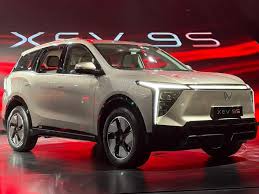
With the launch of the XEV 9S this week, Mahindra hasn’t just released another car; they have executed a strategic checkmate that targets the very heart of the Indian family mobility market.
Here is why the industry needs to wake up to the “Mahindra Playbook”:
1. The Death of the “EV Premium” Myth
For years, the barrier to EV adoption was the exorbitant upfront cost. Mahindra just shattered that ceiling. The launch of the XEV 9S, a full-sized 7-seater electric SUV, at an introductory price of ₹19.95 Lakh, is aggressive. It is disruptive.
To put this in perspective:
- They are offering a 3-row electric SUV for the price of a mid-spec ICE creta/Seltos.
- They are undercutting their own 5-seater coupe (XEV 9e) by nearly ₹2 Lakhs.
This isn’t a price war; it’s a value re-calibration. By positioning a 7-seater EV at this price point, Mahindra is no longer competing with other EVs; they are competing directly with diesel family haulers.
2. Platform Economics: The “INGLO” Advantage
How do you price a 7-seater EV under ₹20 Lakhs without bleeding cash? The answer lies in what M&M calls “extreme commonisation”.
Mahindra isn’t building cars; they are building a modular ecosystem on the INGLO platform. By sharing major components across the BE 6, XEV 9e, and XEV 9S, they have dramatically slashed development, validation, and procurement costs.
While others are struggling with margins, Mahindra is leveraging platform scalability to defend its revenue lead.
3. The “China Plus One” Reality Check
While we discuss domestic battles, the supply chain reality is shifting. The government’s approval of a ₹72.8 billion scheme for rare earth permanent magnet manufacturing is a critical geopolitical move.
We cannot build a resilient EV ecosystem while depending on a single source for magnets. With companies like Manganese Ore India (MOIL) ramping up production for EV battery inputs, India is finally moving from “assembly” to true “manufacturing sovereignty.”
4. The Global Giant vs. The Local Warlord
The juxtaposition in the market right now is stark.
- Tesla, the global EV poster child, has sold just over 100 cars in India since its debut, struggling with price points and niche appeal.
- Mahindra, the homegrown giant, moved 30,000 electric SUVs in just seven months.
It is not possible to copy-paste a Silicon Valley strategy into Gurugram. The Indian consumer demands value, ruggedness, and space. Mahindra’s data shows 65% of their EV owners drive them daily, and nearly 60% are getting a real-world range of over 500km. That is how you build trust.
We are witnessing a maturity phase in the Indian EV sector. The “early adopter” phase is over. The “mass adoption” phase has begun, and it belongs to the player who can offer a 7-seater, tech-loaded SUV without the luxury tax tag.
What’s your take? Is the 7-seater EV the key to unlocking mass adoption in India, or will infrastructure remain the bottleneck?
#ElectricVehicles #AutoIndustry #Strategy #Mahindra #Leadership #IndiaBusiness #EVRevolution